Matilda Revisited
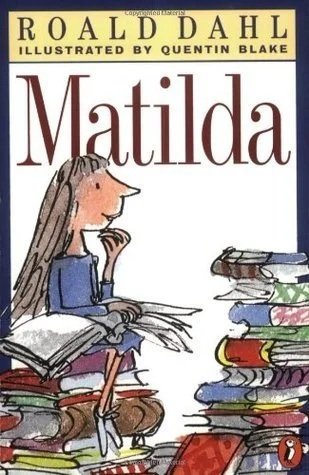
At last count, Roald Dahl’s 1988 middle grade novel, Matilda, had 26,400 reviews on Goodreads. Does the world need another review? Probably not. So why write one? I enjoy telling anyone who will listen how much I love this book.
If you have never had the pleasure of reading Matilda, the story concerns a sweet, 6-year old girl living in a modest town in England. She is super-smart but stuck in a family with a crude father and a distant mother who disparage her interest in books and learning, constantly telling her she is stupid and an annoyance.
“Daddy,” she said, “do you think you could buy me a book?”
“A book?” he said. What d’you want a flaming book for?”
“To read, Daddy.”
“What’s wrong with the telly, for heaven’s sake? We’ve got a lovely telly with a twelve-inch screen and now you come asking for a book! You’re getting spoiled, my girl!””
Matilda resents her treatment but doesn’t sulk or cry or retreat into self-isolation. Instead, she gets revenge, launching a series of hilarious pranks against her father, such as putting super-glue around the rim of his hat.
Matilda hopes school will provide some respite from her abusive home but, at school, she encounters the kid-hating terror of a headmistress, Miss Trunchbull. The Headmistress is an evil bully who terrorizes kids, staff, and parents alike. In one memorable scene, Trunchbull, a former Olympian, swings a student by the pigtails and tosses her into a nearby field (she hates girls who wear pigtails). Fortunately for Matilda, her kind teacher, Miss Honey, recognizes and nutures her abilities. Matilda discovers she has telekinesis, the power to move objects, which power she uses to save the school from Miss Trunchbull. Matilda’s parents decide to flee town when her father’s crooked, used-car dealer tactics are exposed. They don’t really want to take Matilda with them and Matilda happily gets taken in by the sweet Miss Honey.
Matilda is a modern-day fantasy, a fairy-tale inspiration where an abused and isolated bookworm gathers her inner resources and wins the day against all odds. In real life, it is far more likely Matilda would be beaten down into the foster care system, retreating into self-isolation or self-destruction. This tribute to the power of imagination, kindness and determination is what I love most about Matilda and what I believe explains much of its enduring public appeal.
Some 37 years after its publication, the humor in Matilda still stands out, as does Dahl’s inventive, playful use of language. Consider some of the epithets Miss Trunchbull hurls against her cowering students, festering gumboil, flea-bitten fungus, bursting blister, moth-eaten maggot. I can’t say I use them in daily life but they sure are fun to think about.
Since its publication in 1988, Matilda has spawned a marketing empire. The novel was followed by the charming Danny DeVito movie in 1996, which enjoyed modest success but has since became a kind of a cult classic. Then came the 2010 Tony and Olivier-award winning Broadway musical, followed by the blockbuster movie based on the musical in 2022.
Roald Dahl has sold over 300 million books. May I suggest you make it 300 million and one?
Stay tuned for the review of “Eleven” by Tom Rogers.